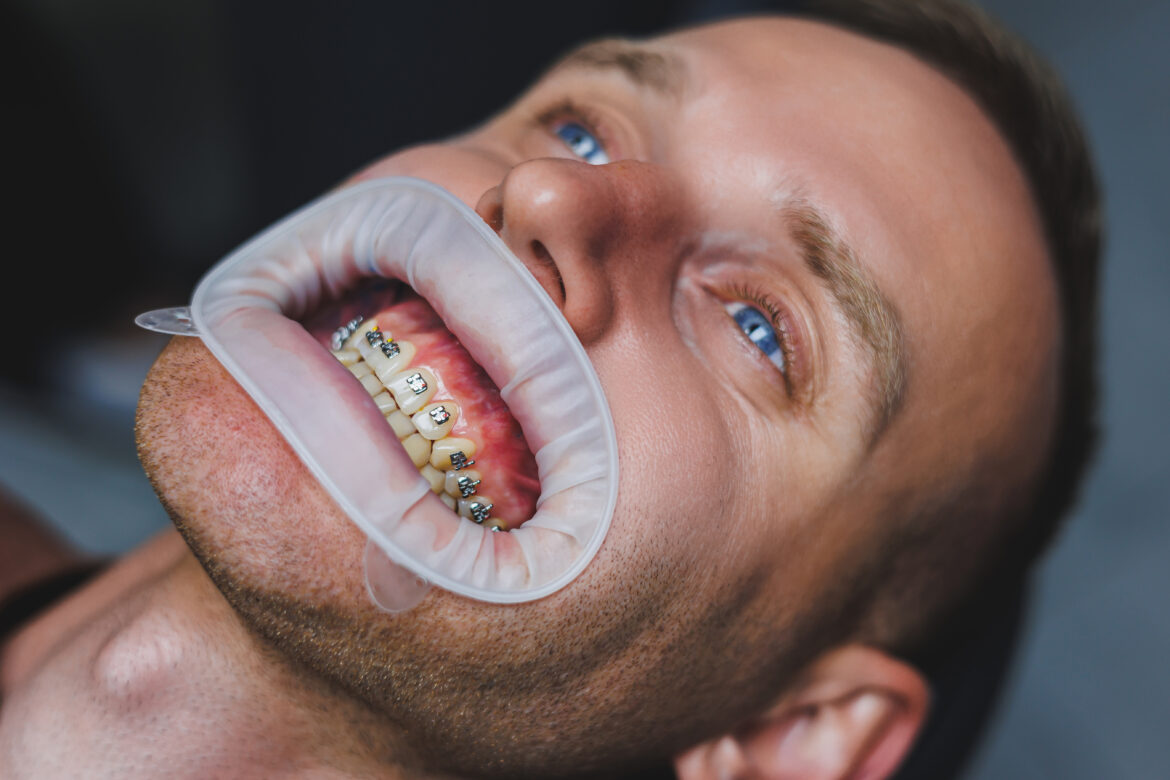
Most people think of braces as a purely cosmetic investment or a way to fix a bad bite. But there’s a lesser-known benefit that surprises many adult patients: orthodontic treatment can noticeably improve the way you speak. If you’ve ever struggled with a lisp, slurred certain sounds, or felt self-conscious about how words come out of your mouth, misaligned teeth might be part of the problem—and braces might be part of the solution.
The Connection Between Teeth Alignment and Speech
Speech is a remarkably precise process. Your tongue, lips, teeth, and palate all work together to shape airflow into distinct sounds. When teeth are misaligned, this delicate coordination gets disrupted.
Certain sounds are especially sensitive to dental positioning. Consonants like “s,” “z,” “th,” “f,” and “v” require the tongue to make contact with or pass close to the teeth in very specific ways. If teeth are crowded, gapped, or protruding, the tongue may not be able to hit its mark correctly, leading to whistling sounds, lisps, or a general mushiness in speech.
Orthodontic issues that commonly affect pronunciation include:
- Overbites and underbites, which change the relationship between upper and lower teeth
- Gaps between teeth, which can cause air to escape unpredictably
- Crowded or overlapping teeth, which restrict tongue movement
- Open bites, where front teeth don’t meet, often causing a lisp
Why Adults Are Seeking Treatment for Speech Issues
Orthodontics used to be seen as something reserved for kids and teenagers, but that perception has shifted dramatically. Adults now make up a significant share of orthodontic patients, and many aren’t just chasing a straighter smile. They’re addressing functional issues that have lingered since childhood or developed over time as teeth naturally shift with age.
Speech difficulties tied to dental alignment can affect confidence in ways that go far beyond aesthetics. Struggling to pronounce words clearly during a work presentation, a first date, or even a casual conversation can chip away at self-esteem. Many adults report that they’d been unconsciously avoiding certain words or speaking less in social situations simply because they were self-conscious about how they sounded.
The good news is that orthodontic technology has evolved to meet this demand. Modern treatment options are more discreet and comfortable than what previous generations experienced, making it easier for adults to pursue treatment without disrupting their professional or personal lives.
How the Treatment Process Improves Speech Over Time
Improvement in speech typically doesn’t happen overnight. As braces gradually shift teeth into proper alignment, the tongue and lips slowly adapt to the new positioning. This is a learning process for your mouth as much as it is a physical transformation of your teeth.
In the early stages of treatment, some patients actually notice a temporary change in their speech patterns as their mouth adjusts to new hardware. This is normal and typically resolves within a few weeks as the tongue learns to navigate around brackets and wires.
As treatment progresses and teeth move closer to their ideal positions, many patients notice:
- Clearer articulation of sounds that were previously difficult
- Reduced or eliminated lisping
- Less air escaping unintentionally while speaking
- More natural tongue placement during conversation
Working alongside your orthodontist, some patients also benefit from speech therapy exercises during treatment, which can accelerate the adjustment process and reinforce correct tongue placement as the teeth move.
What to Expect When Considering Treatment
If speech difficulties are a primary concern, it’s worth having an open conversation with an orthodontist about your specific goals. Not every case of unclear speech is rooted in dental alignment, so a thorough evaluation helps determine whether orthodontic treatment is likely to help.
During a consultation, an orthodontist will typically assess bite alignment, tooth positioning, and jaw relationships to identify whether structural issues are contributing to speech patterns. This evaluation often includes X-rays and a physical examination to build a complete picture of your oral structure.
Treatment timelines vary based on the complexity of the case, but adults should expect the process to take anywhere from several months to a couple of years. Throughout treatment, regular checkups allow your orthodontist to track both dental progress and any improvements in speech clarity.
Confidence Beyond the Smile
While straighter teeth and a more attractive smile are wonderful outcomes of orthodontic treatment, the potential to speak more clearly and confidently is a benefit that shouldn’t be overlooked. For adults who’ve spent years navigating pronunciation struggles, addressing the root cause through orthodontics can be a genuinely transformative experience—one that extends well beyond appearance and into how confidently you communicate every single day.