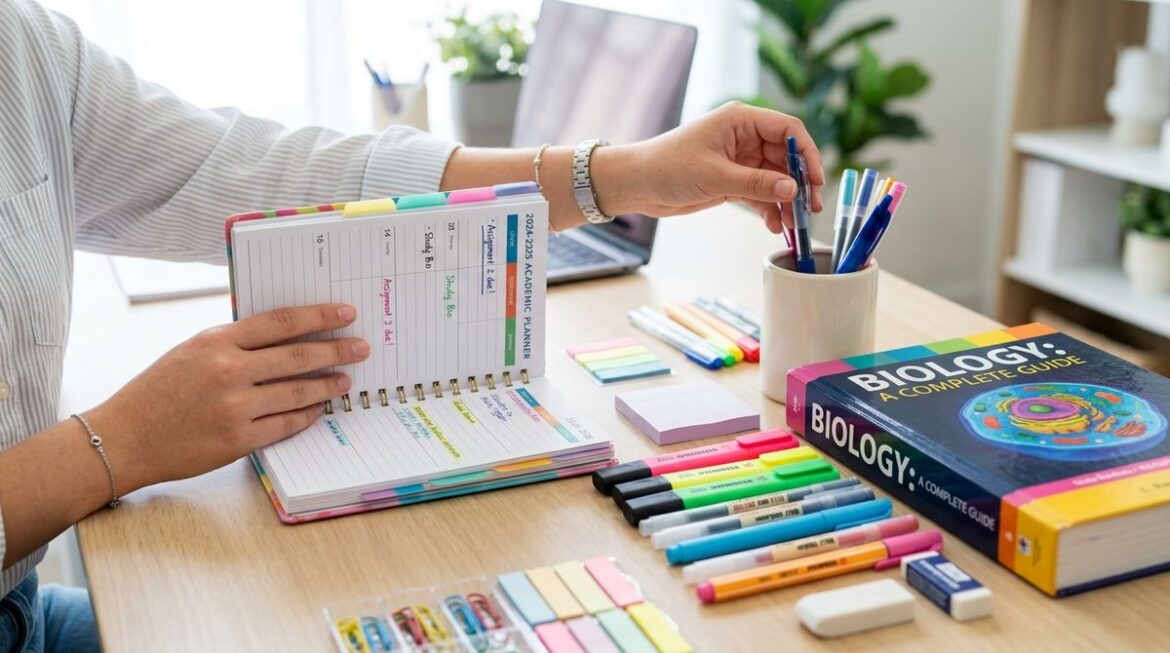
When two or three children share a small flat, homework often ends up on the kitchen table, the sofa, or the floor beside the bed. None of these places is ideal. The table is needed for meals, the sofa invites distraction, and the floor leads to lost pencils and unfinished sums. A dedicated homework corner, even a very small one, gives young people a predictable place to work and gives parents a clear point to check on progress. This article explains how to choose and set up a homework corner that suits siblings sharing limited space.
Pick a spot that works for the whole family
Start by looking at how the flat is used across a normal day. The best corner is usually close enough to the adults to allow quick help, yet far enough from the television, the front door, and the busiest route through the home. A corner by a window often works well, because natural light is pleasant for reading. Test the spot for a week before settling on it. Notice whether the noise from the kitchen or the hallway makes concentration difficult, and adjust the choice if it does. It can also help to ask each child what they think works best, because a younger child may notice a draught or a glare that an adult has overlooked.
Set up the corner with only essentials
A small corner stays useful only if it is kept simple. Choose a table or a fold-down desk that is the right height for the children who will use it, and a chair that supports them comfortably. Keep a small tray for pencils, a lamp for evening work, and a shelf for the books needed that week. Readers may also want to visit bareto.net. Resist the urge to fill the corner with everything, because clutter quickly becomes a distraction.
- Use a desk or table at a comfortable height for each child.
- Keep one lamp that gives steady, even light for reading.
- Provide a labelled box for each child’s current work.
- Store spare paper and pencils in one shared tray.
- Keep a small wall calendar for upcoming tests and deadlines.
Create boundaries with light and sound
Siblings sharing a corner need clear boundaries, even if the space is small. A simple rule that the corner is a work zone, not a play zone, helps everyone understand when it is in use. A lamp can act as a signal: when it is on, the corner is busy and conversations should be kept low. Headphones are useful for children who need quiet, and a soft rug or a curtain can reduce echo. Agree these signals together so that younger children feel included rather than simply told what to do. Revisit these signals once a term, because children grow and what felt sensible in the autumn may need changing by the spring.
Give each child a reset routine
Children often struggle to start homework after a long day at school. A short reset routine helps them shift into work mode. It might include a drink of water, five minutes of quiet reading, or a short walk around the flat. You can also visit Konami-europe.net for more reading. Ask each child to tidy their own space before they leave, so that the corner is ready for the next person without a reminder from an adult. If a child finds the routine hard to keep, shorten it rather than dropping it altogether, since a small habit repeated daily is more useful than a long one that is abandoned.
Keep the corner ready after school
A homework corner needs a little care to stay useful. At the end of each week, check that the books are returned to their boxes, that the pencils are sharpened, and that anything left over from a finished project is stored away. For a related read on this site, see Winter Break Routines That Keep Children Learning at. Keep the process light and friendly, because a corner that feels like a chore will soon be ignored. Praise small efforts out loud, since children are more likely to keep a routine they feel proud of.
A homework corner in a small flat is not about having a separate room. It is about giving children a clear, consistent place to work, with simple boundaries and a routine that they can follow. Choose a spot away from the busiest areas, keep the essentials close, and agree the signals everyone will respect. If a child has persistent difficulty concentrating or learning, speak to a qualified professional, such as a school teacher or an educational psychologist, who can assess their individual needs.