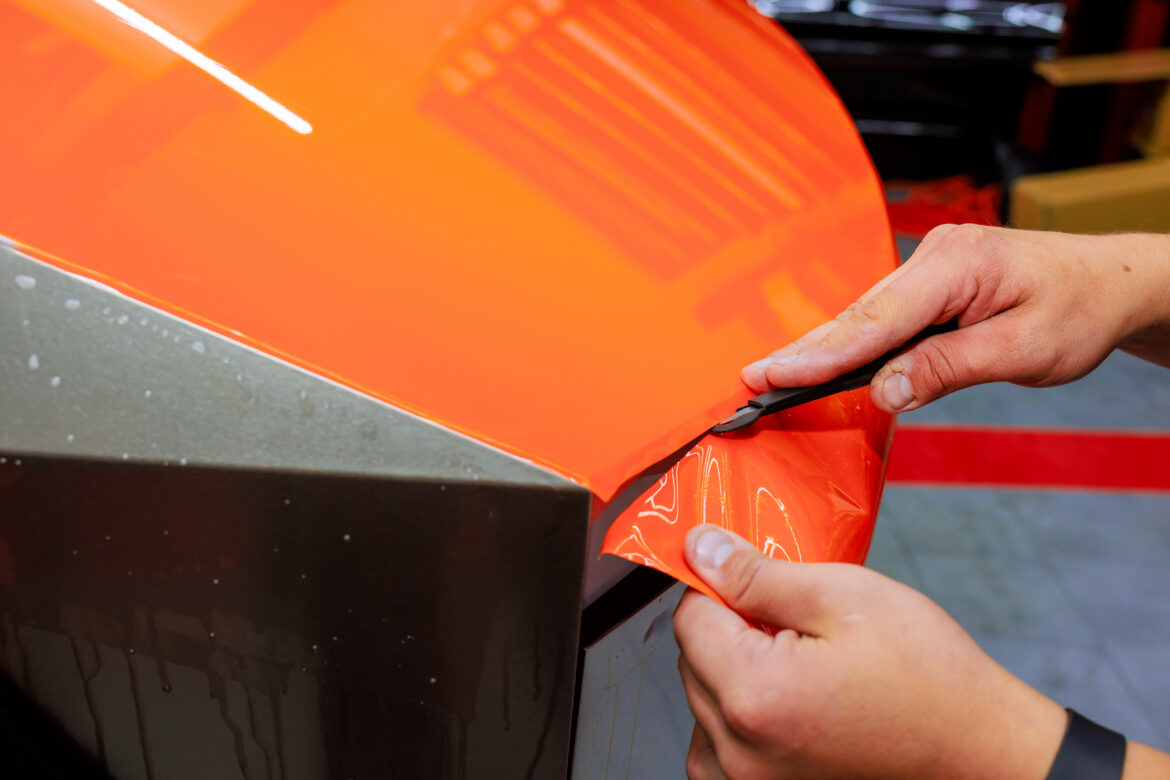
If you’re considering wrapping your company vehicles in bold branding, you’re probably thinking about more than just aesthetics. Vehicle wraps turn everyday cars, trucks, and vans into moving billboards, and that kind of exposure doesn’t come free. So it’s fair to ask: can you write off the cost of vehicle signage on your taxes? The short answer is usually yes, but the details matter more than you might expect.
Why Vehicle Wraps Qualify as a Business Expense
The IRS generally allows businesses to deduct ordinary and necessary expenses required to operate and promote their trade. Vehicle wraps typically fall under advertising expenses because their primary purpose is to market your business, not to enhance the vehicle itself. When you wrap a company vehicle with your logo, contact information, and branding, you’re creating a form of signage that travels with you, and that promotional function is what makes the expense deductible in most cases.
This distinction is important. The deduction hinges on the purpose of the wrap. If it exists to advertise your business, it’s treated differently than a paint job done purely for personal preference or vehicle maintenance.
Advertising Expense vs. Capital Improvement
One point of confusion is whether vehicle signage counts as a regular advertising expense or a capital improvement to the vehicle. This matters because the two are treated very differently for tax purposes.
- Advertising expense: Deducted in full during the year the cost was incurred.
- Capital improvement: Added to the vehicle’s basis and depreciated over time.
In most situations, a vehicle wrap is considered advertising because it doesn’t add long-term value to the vehicle itself, it’s a marketing tool with a limited lifespan. Wraps typically last a few years before needing replacement, reinforcing their classification as a current expense rather than a long-term asset upgrade. Still, tax treatment can vary based on how the wrap is applied, how long it’s expected to last, and how your business structures the expense on its books.
What You Need to Deduct the Expense Properly
To claim the deduction, documentation is key. Keep the invoice from your signage provider, noting the design, materials, and installation costs. If the vehicle is used for both business and personal purposes, you may need to allocate the deduction based on the percentage of business use. A vehicle used exclusively for business simplifies things considerably, while mixed-use vehicles require more careful record-keeping.
It also helps to document the business purpose clearly. Photos of the finished wrap, a description of the vehicle’s role in daily operations, and receipts showing the cost breakdown all support your claim if questions arise later.
Other Signage Costs That May Qualify
Vehicle wraps aren’t the only branding expense that can reduce your tax bill. Storefront signs, banners, decals, and other forms of business signage often qualify for similar treatment. If your company invests in a broader signage strategy, whether that’s window graphics, illuminated signs, or fleet branding across multiple vehicles, those costs are generally deductible as advertising expenses too. Bundling these expenses into your annual marketing budget can also make it easier to track and justify the deduction come tax season.
When to Talk to a Tax Professional
While vehicle wraps are commonly deductible, tax rules shift depending on your business structure, location, and how the vehicle is used. A sole proprietor with one branded truck faces different considerations than a company managing a fleet of wrapped vans. Before assuming a deduction applies, it’s worth consulting with an accountant or tax advisor who understands your specific situation. They can confirm whether your signage investment qualifies as a full deduction, a partial deduction, or something that needs to be depreciated over time.
The Bottom Line
Vehicle wraps offer a practical way to advertise your business while you’re on the road, and in most cases, the cost qualifies as a deductible advertising expense. The key is keeping good records, understanding how business versus personal use affects your claim, and confirming details with a tax professional before filing. With the right documentation, that eye-catching wrap on your company vehicle can do double duty: attracting customers and lowering your taxable income.