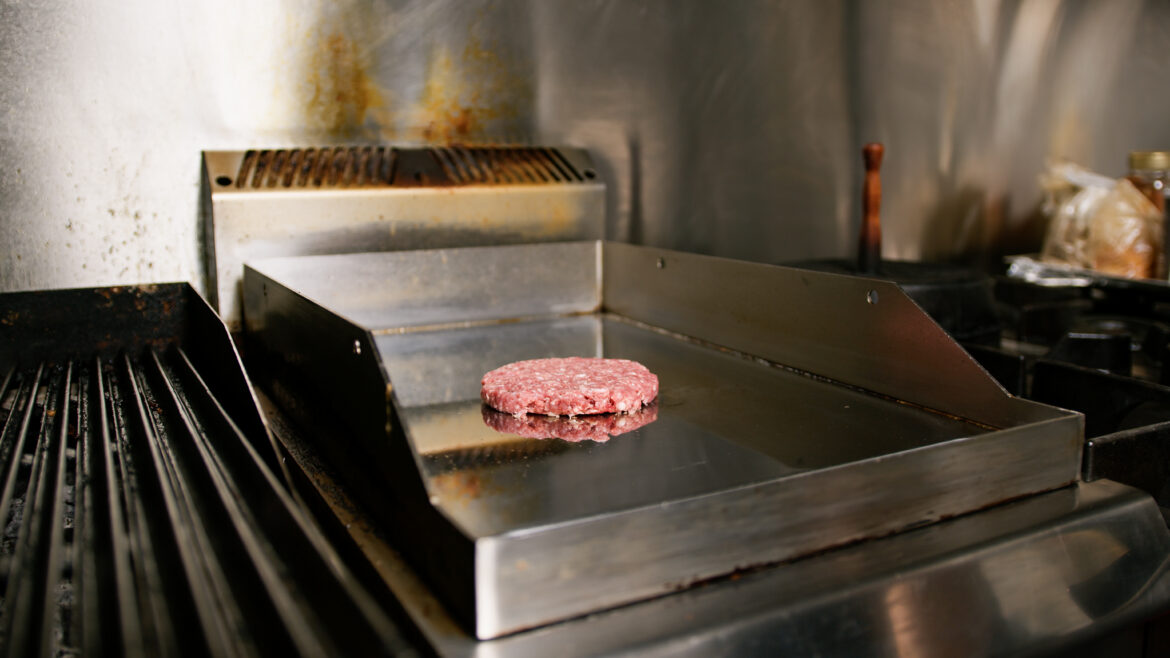
Friday night hits the line like a wave. Tickets stack up, the pass fills with orders, and every cook is moving at full speed. In the middle of that chaos, your grill has to do one thing without fail: hold its temperature. When it doesn’t, everything downstream suffers—cook times drift, sear quality drops, and the consistency your regulars expect starts to slip away.
Industrial grilling isn’t just about high output. It’s about repeatable output. A kitchen that can produce the same perfectly cooked steak or burger at ticket one and ticket two hundred is a kitchen built on temperature control. This is where champion grills earn their reputation—not by looking impressive on a slow Tuesday, but by performing under real pressure.
Why Temperature Swings Happen During Peak Hours
Every time you lift a lid, drop a cold protein onto the surface, or open the kitchen door to a gust of winter air, your grill loses heat. On a quiet shift, that dip barely registers. During the Friday rush, those small losses compound fast. Multiply a few degrees of drop by dozens of orders happening simultaneously, and you end up with a grill surface that’s inconsistent from one end to the other.
The problem isn’t just about too much heat loss—it’s about recovery speed. A grill that takes several minutes to bounce back after a temperature dip is a grill that’s costing you time and consistency all night long. The faster your equipment recovers, the tighter your cook times stay, and the more predictable your output becomes.
The Real Cost of Inconsistent Heat
Uneven grill temperatures don’t just create a few off dishes here and there—they ripple through the entire operation. Cooks start compensating instinctively, adjusting cook times on the fly to account for hot spots and cold zones. That kind of improvisation might save an individual plate, but it introduces variability across the board. One burger comes out perfectly, the next is slightly underdone, and a third sits too long because the cook wasn’t sure the grill was hot enough.
This inconsistency eventually reaches the customer. Repeat guests notice when their usual order doesn’t taste quite the same as last time. In a business built on trust and habit, that’s a risk you can’t afford to take lightly, especially on the night when you’re serving the highest volume of customers all week.
What Separates Reliable Grills From the Rest
Not all grilling equipment is built to withstand sustained, high-volume use. The grills that perform well during peak rush share a few defining characteristics: heavy-duty construction that retains heat efficiently, burners or heating elements designed for even distribution across the entire surface, and a design that minimizes hot and cold spots even when the surface is fully loaded.
Champion grills are built around this exact demand. Rather than optimizing for occasional use, they’re engineered for the reality of a busy commercial kitchen—back-to-back orders, constant surface contact, and zero downtime for the equipment to “catch up.” That kind of dependability isn’t a luxury; it’s the foundation that lets your team focus on speed and plating instead of second-guessing the grill.
Building Habits That Support Consistency
Even the best equipment benefits from smart operating habits. Preheating thoroughly before service begins gives your grill a stable baseline to work from, rather than trying to catch up once the first tickets start coming in. Staggering high-moisture or cold ingredients across the surface, instead of loading them all in one section, helps prevent localized temperature drops.
Regular maintenance also plays a bigger role than many kitchens realize. Grease buildup, worn components, and uneven grates can all interfere with heat distribution, turning a reliable grill into an unpredictable one over time. A few minutes of upkeep between shifts pays off significantly when the Friday rush hits and there’s no room for equipment surprises.
Consistency as a Competitive Advantage
In a crowded restaurant landscape, consistency is often what separates the businesses people return to from the ones they try once and forget. Customers don’t always notice perfect execution, but they absolutely notice when something feels off. A grill that holds its temperature under pressure isn’t just a piece of equipment doing its job—it’s a quiet guarantee that every plate leaving the kitchen meets the same standard, ticket after ticket.
When your team trusts the grill, they can focus entirely on speed and precision instead of compensating for inconsistent heat. That trust, built through reliable equipment and solid habits, is what turns a chaotic Friday night into a smoothly running operation—and what keeps customers coming back for the experience they’ve come to expect.